PORTLAND HARBOR SUPERFUND
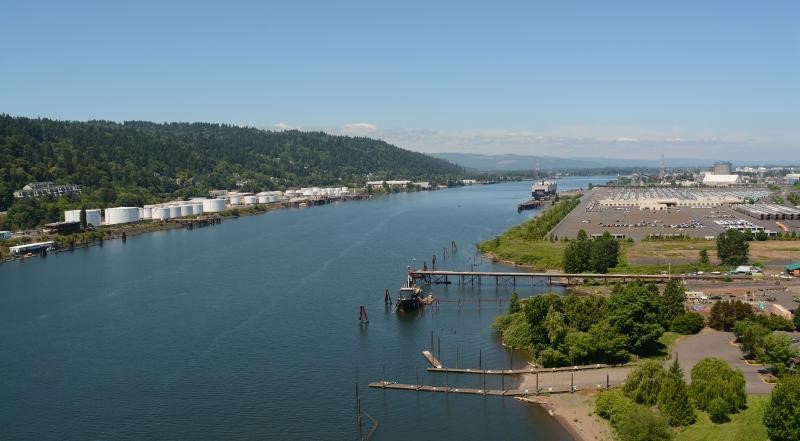
The Record of Decision was Released, January 6, 2017. After 16 years of hard work, Willamette Riverkeeper and the Community advance river health, and community health.
Since January of 2017, the US EPA has been working with the many Potentially Responsible Parties to develop agreements that will advance planning for work on individual sites along the river. The hope is we will see in water work during the Summer of 2022 at individual sites along the river.
The 11 mile stretch of the river is a Superfund site, because it contains PCBs, PAH, DDE, Dioxin, and many other pollutants. The “cleanup” is an exercise to reduce risk to people and the ecosystem from these pollutants in the river sediments. As a reminder, the vast majority of pollutants are buried in the river bottom.
To reduce risk, these pollutants will be:
a)removed in some cases, and this is a small amount of the pollution,
b) will be covered up with clean material, or
c) will eventually be covered by more of the river’s natural sediment load.
Along the whole 11 mile stretch of river, the pollution can be found typically in hotspots in various nearshore areas, or at lower levels across a wider area. Given the sources were typically industrial activity on riverside land, the pollution is often very near the shore.

Map of some of the Contaminants of Concern (COC)
While the Record of Decision was not as comprehensive as WR and its community partners called for, it will permanently remove significant amounts of polluted river sediment from the Willamette. Over 3 million cubic yards of sediment will be dredged.
The overall cleanup will result in reduced cancer risk for people, and reduced ecological impacts for fish, birds, and mammals.
The cleanup will take over a decade, and having a clear view of how individual sites are addressed along the ten-mile stretch of river will help ensure that the implementation of this decision reflects what the Record of Decision calls for, and represents the long-term interests of the river.
Today, there are multiple sites being addressed, some of them owned by the public. Willamette Cove, and Cathedral Park are two of these. Each has a process that involves the public in discussion, and taking input.
WR has advocated for a transparent process with the US EPA, Oregon DEQ, the City of Portland, and others who hold legal responsibility for implementing the cleanup.
BACKGROUND
Q: Why does pollution in the river matter?
A: Pollutants such as PCBs, DDT, and oil-based contaminants were released into the Willamette River for decades, and collected in the river bottom across a 10 mile stretch of river. The pollutants are also found in riverside lands. These and other pollutants can increase the risk of cancer for people who eat resident fish on a regular basis. The pollutants can also have negative impacts on a range of wildlife, from fish and baby river otters to shorebirds and Osprey. Much of it is very toxic, and needs to be removed from the river!
Those who have liability for the pollution in our river are required to clean it up under the federal Superfund law, or they must pay to clean it up. There are over 100 different entities who hold liability in relation to Portland Harbor.
The Portland Harbor Superfund site is a highly contaminated stretch of the Willamette River that extends approximately 11 miles, near the confluence with the Columbia River to the Fremont Bridge. In 2000 this area was designated a Federal Superfund Site under the Comprehensive Environmental Response, Compensation and Liability Act (CERCLA). This means the federal government has recognized this portion of the Willamette among the most polluted sites in the nation. Clean and healthy rivers are part of the Public Trust that holds that our rivers are held “in common, and belong to all.” Our river should be clean and healthy, to benefit all of us
Those who hold liability for the cleanup are legally called Potentially Responsible Parties (PRP).
The Cleanup Timeline to Date:
Pollution was characterized in the 1990s by the State of Oregon.
The site was listed as a Superfund site in December of 2000 (WR started work in earnest at this time, and shortly after formed the Portland Harbor Community Advisory Group, also known as the CAG).
Remedial Investigation: Identified the extent and type of contamination. (Completed.)
Feasibility Study: Proposed Cleanup options, and evaluation of options. (Released by PRPs in March 2012 but finalized by the EPA in 2016.)
Proposed Draft Cleanup Plan: (Released by the US EPA June 8, 2016) Outlined the specific approach to the cleanup. The official public comment period was open and enabled the EPA to receive feedback from the general public.
Record of Decision: The final plan that directs the Cleanup process.
Cleanup Actions and restoration - happening in 2021 and beyond.

The Pollution
There are a variety of pollutants in Portland Harbor, including polychlorinatedbiphenyls (PCBs), metals (cadmium, lead, zinc), dioxins, furans, polycyclicaromatic hydrocarbons (PAHs), arsenic, DDT, and mercury. Some of these are also found in riverside “upland” areas.
Many of these pollutants are byproducts of past industrial activities. An example of this are PCBs, used decades ago, which now comprise one of the most widespread pollutants found in the river. Once released into the environment, many pollutants like PCBs take decades to break down and remain in the river with the potential to harm the health of fish, wildlife and people. These pollutants may react together in the environment to create even more toxic compounds.
Here are the top three ways these contaminants can harm the people and wildlife in our community:
Consumption of resident fish and shellfish are taken from the Portland Harbor.
Infant consumption of breast milk from mothers who are exposed to contaminants.
Bioaccumulation: Contaminated sediment is eaten by plankton, which are eaten by bottom-feeders, which are eaten by fish, which are eaten by humans, birds and mammals thus harming all life forms along this line.
Fact: PCBS, DIOXINS/FURANS, DDT, AND PAHS WERE DETECTED IN MOST SAMPLES OF VARIOUS FISH AND INVERTEBRATE SPECIES COLLECTED. CONCENTRATIONS OF THESE POLLUTANTS VARIED GREATLY WITHIN AND BETWEEN SPECIES, WITH FISH TISSUE CONCENTRATIONS GENERALLY GREATER THAN THOSE IN INVERTEBRATES.

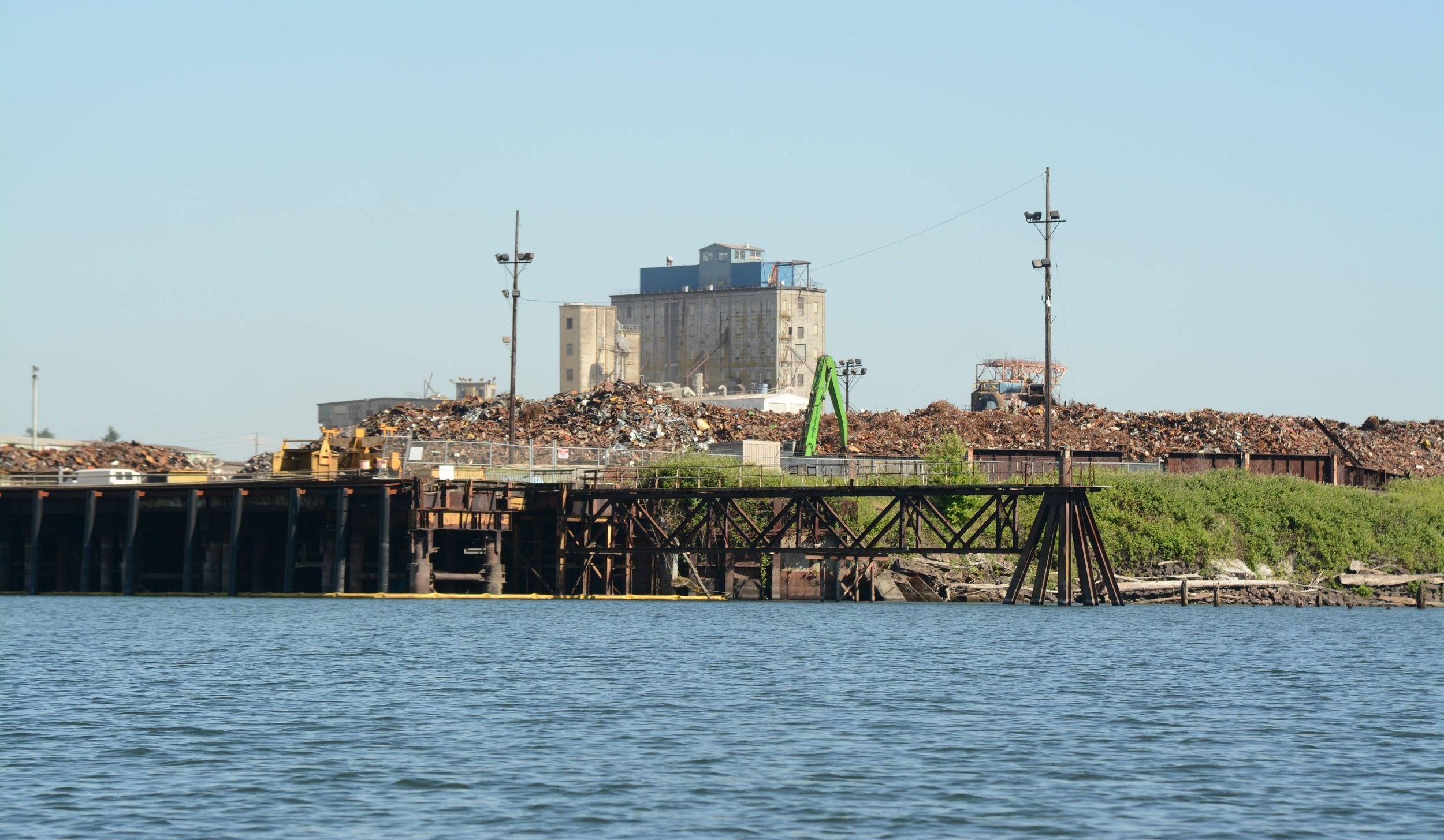
Who is responsible for the Cleanup?
The Environmental Protection Agency (EPA) is responsible for overseeing the Superfund process on behalf of the public and is taking the lead with the in-water portion of the Cleanup. The Oregon Department of Environmental Quality is taking the lead on uplands next to the river to ensure more contamination does not make its way to the river. The EPA oversees DEQ’s work.
Over 100 companies along the river have some responsibility for the pollution. The City of Portland and the Port of Portland also share some liability. Based on the Polluter Pays Principle, these Potentially Responsible Parties (PRP) that either directly caused the pollution or purchased contaminated property, are responsible for the cost and cleanup the pollution. The federal government expects purchasers of industrial lands to do their due diligence before acquiring property and the costs of cleanup are factored into the decision to purchase the property. In 2000 a subset of the PRPs called the Lower Willamette Group signed an agreement with the US EPA to lead the research of the contaminants, then formulate cleanup options in a document called the Feasibility Study (FS). Today the US EPA is working with these entities to sign work agreements to that the cleanup plans for individual sites can be completed. Some entities are eager to begin work, and others less so.

HOW WILL THE POLLUTANTS BE CLEANED UP?
There are several options for cleaning up our river. These options were included at various levels in the record of decision
Removal of Sediment from the river environment and placing it in a landfill.
Capping leaves pollutants in place and actively covers them with clean material (often including layers of clay, rock, and sand). This method includes many years of monitoring, and may provide less certainty in relation to human, fish and wildlife health.
Alternative Treatments can include biochar, carbon enhancements and other emerging approaches that treat sediment both in the river, and once it is removed. These are still in their experimental stages and are unlikely to be the primary strategy.
Natural Recovery simply leaves pollutants in place and relies on the river’s natural sediments to cover up the pollution over time. This is the least protective for the river.

None of the Cleanup options are perfect. Given that there are miles of contaminated sediment, the impact of the decision of whether to remove sediments, cap them, or leave them untreated, is significant. The final solution must adequately protect people and wildlife.

Willamette Riverkeeper's Superfund History
Willamette Riverkeeper has been involved in this process since in the mid-1990s, highlighting the need for an official cleanup process. When the site was finally listed as a federal Superfund site in December of 2000, WR had been fully engaged in this issue, and providing information to the community. In 2000 WR and the US EPA formed the Portland Harbor Community Advisory Group, which had a broad representation of local people who were concerned about the issue.
In the first couple of years, WR gained useful data to uphold the need for this cleanups, from fishing surveys, to pushing for public signage to warn about the contaminants that could be present in some fish. WR also worked closely with the US EPA and Oregon DEQ as they engaged the PRPs in the process. For over 16 years WR has been the lead advocate and community educator on this issue.
While this is a bit dated, here is an example of one of our projects in 2001/02 which is a survey of those fishing along the river. We thought it was critical to capture a random sampling of people along the river. We spoke with over 120 people from 10 to 30 minutes and gained a lot of useful data - clearly indicating the nexus between people and the river.