Coast Fork Willamette
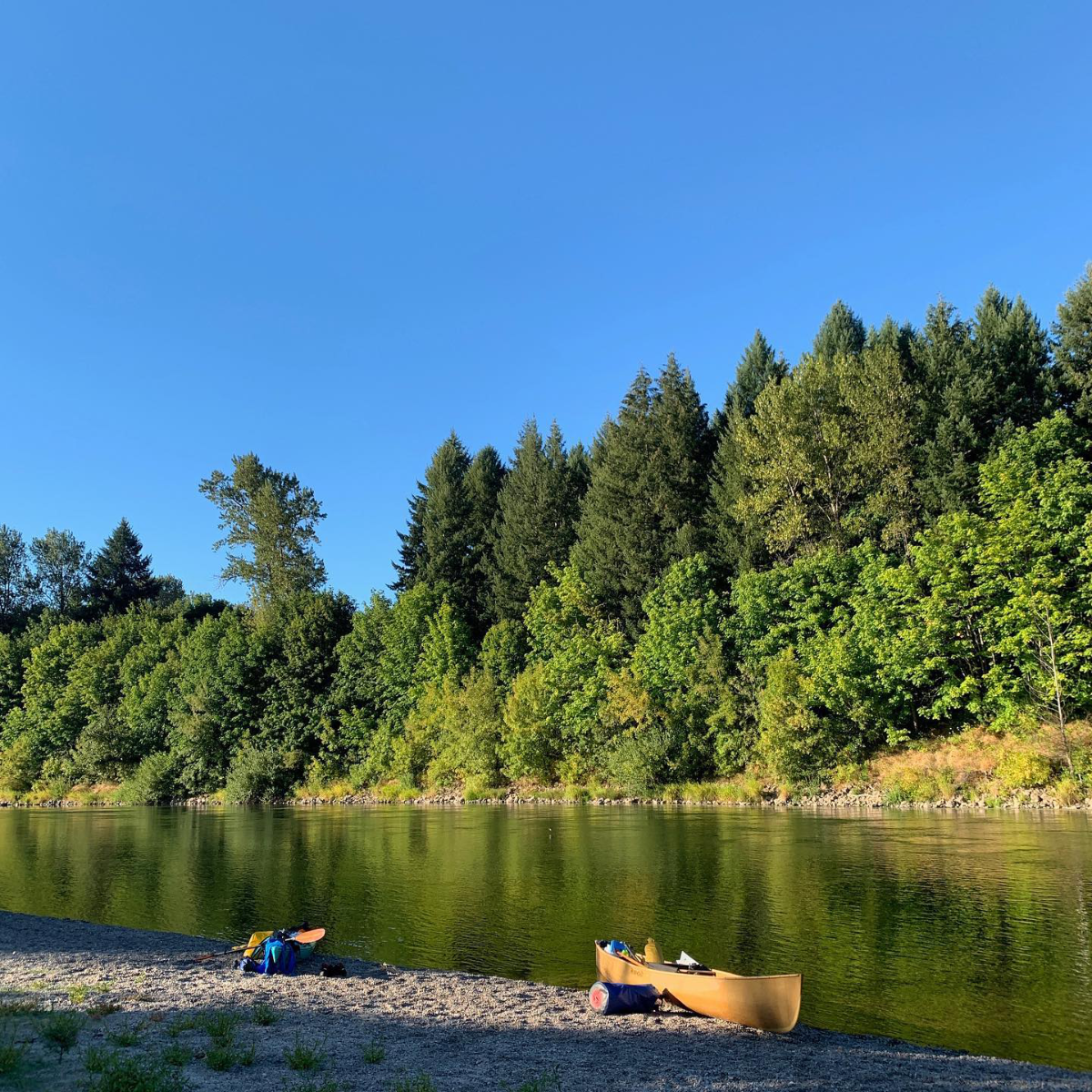
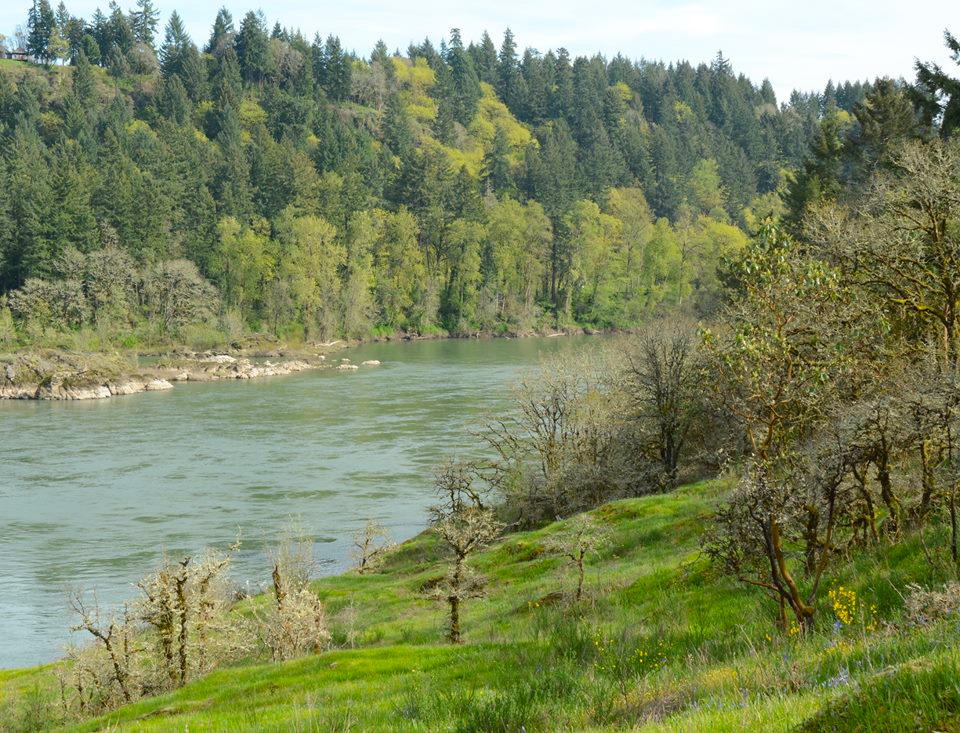
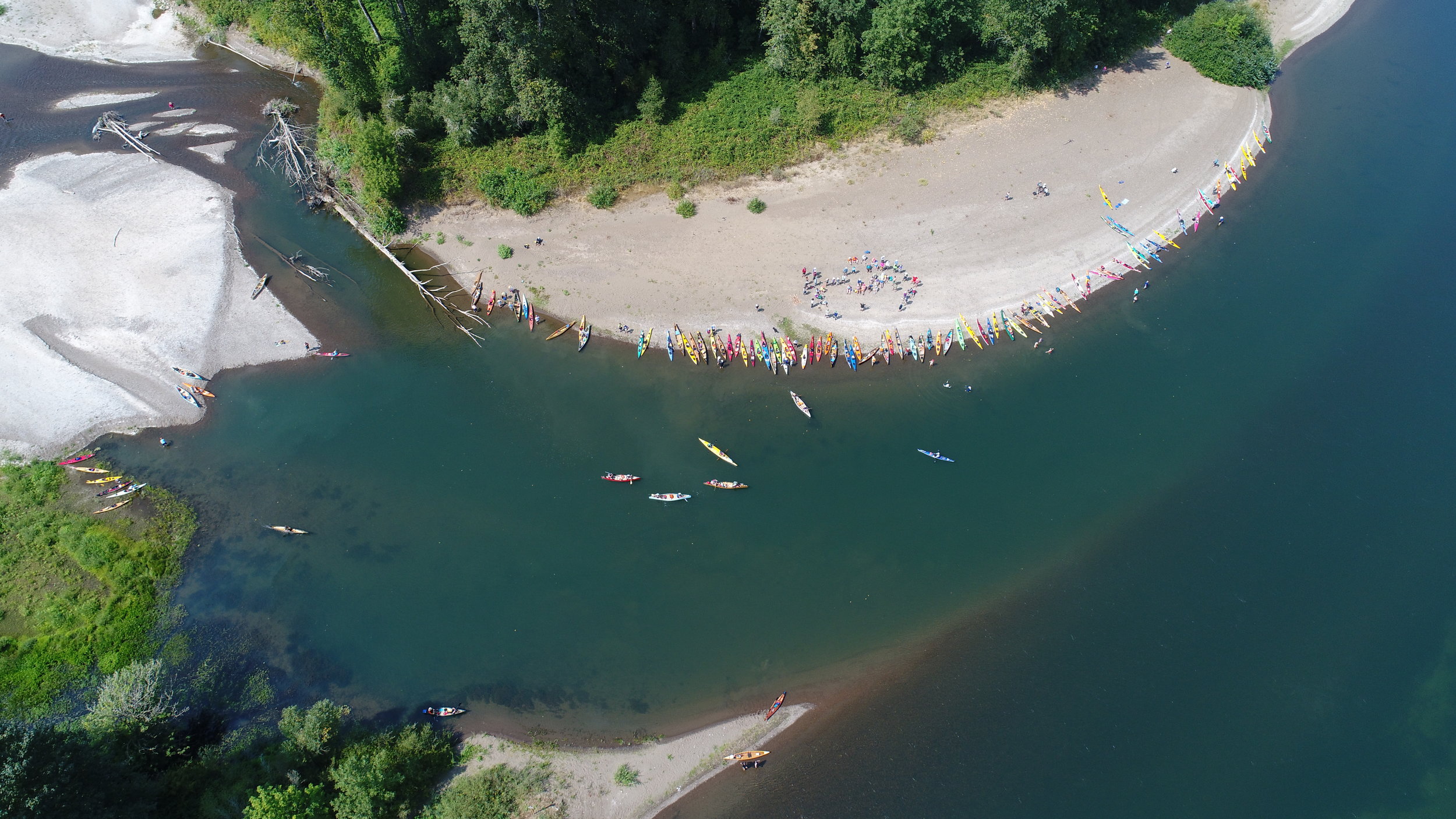
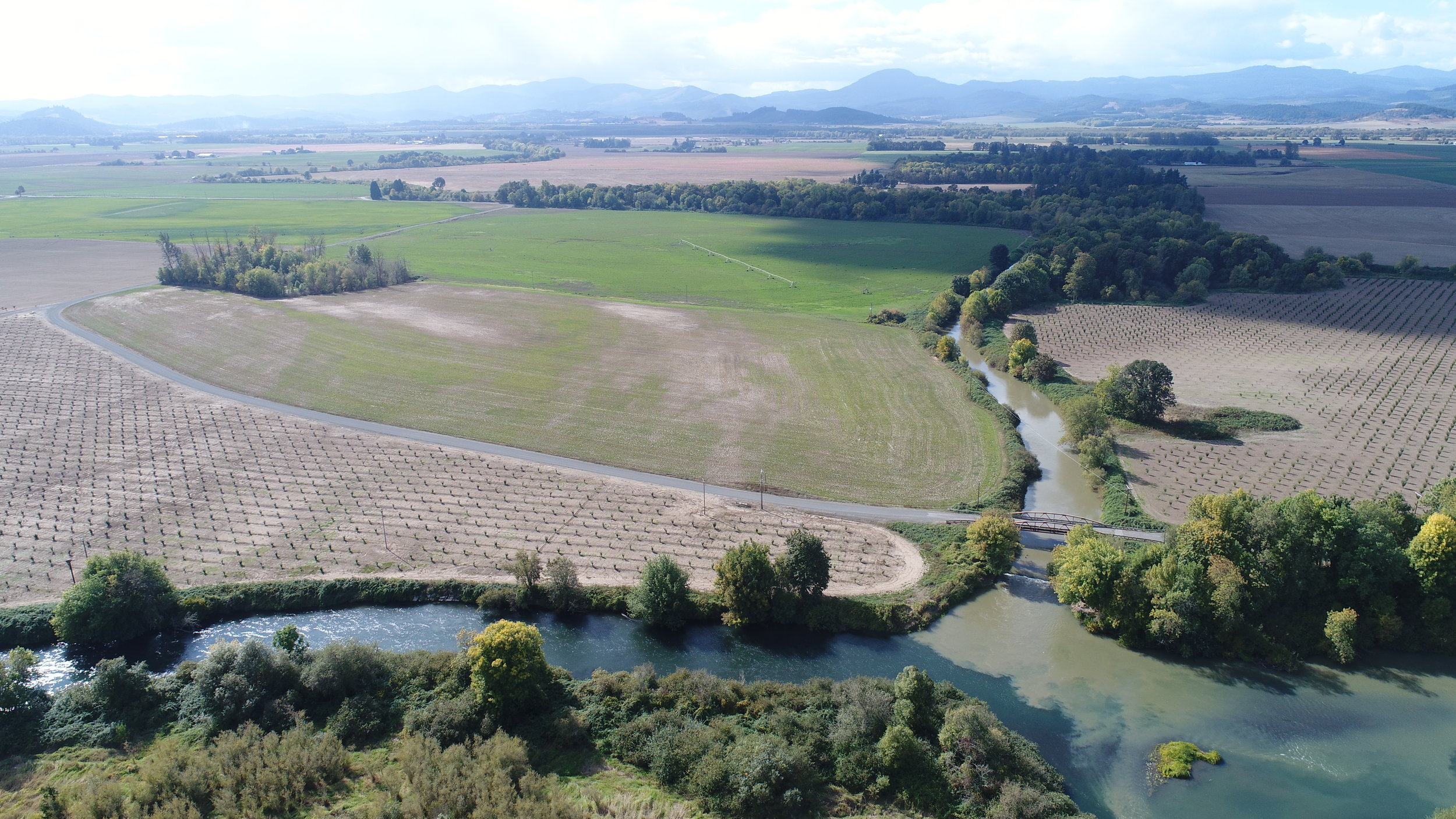
The Coast Fork Willamette is located in the southern most portion of the Willamette Watershed. The Coast Fork and Middle Fork converge to make the mainsteam Willamette at Rivermile 187. The subbasin’s 666 square miles are primarily forested, with agriculture and urban land uses near the mainstem. The Coast Fork Willamette River and the Row River are a source of drinking water for the city of Cottage Grove.
Water quality data for the Coast Fork are relatively small, and there is a need for increased water quality monitoring. Like most other rivers in the Willamette Basin, |

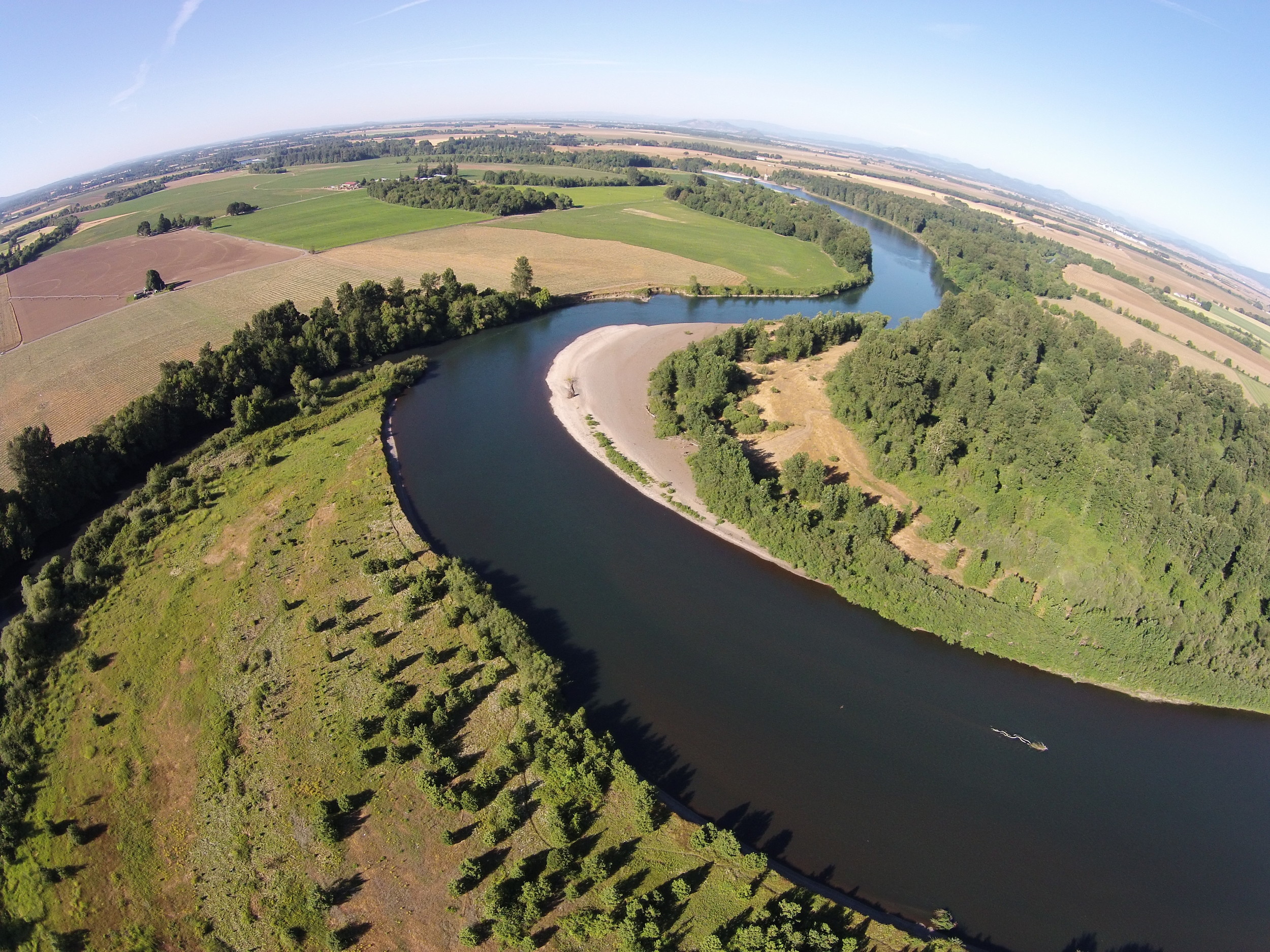
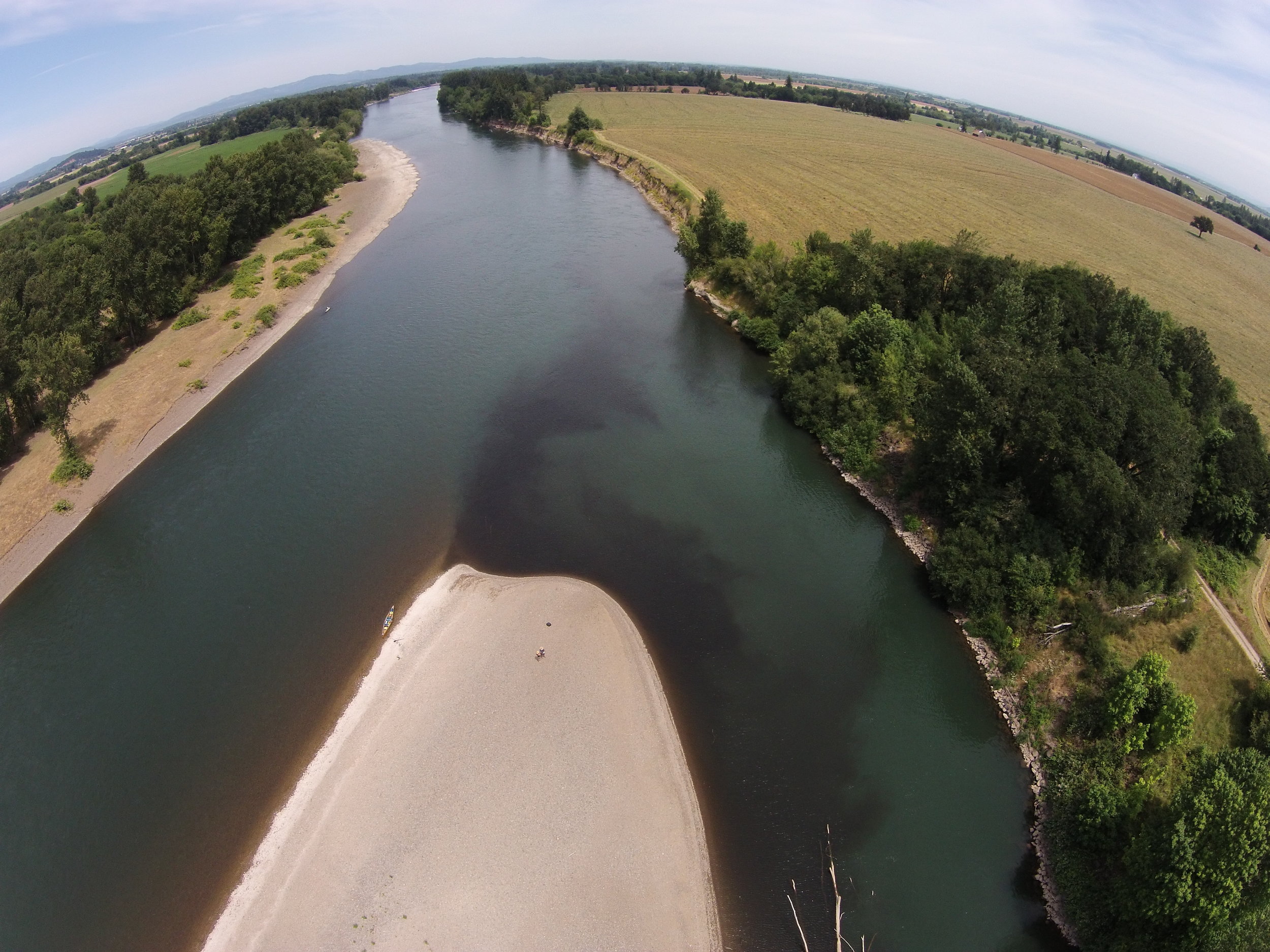
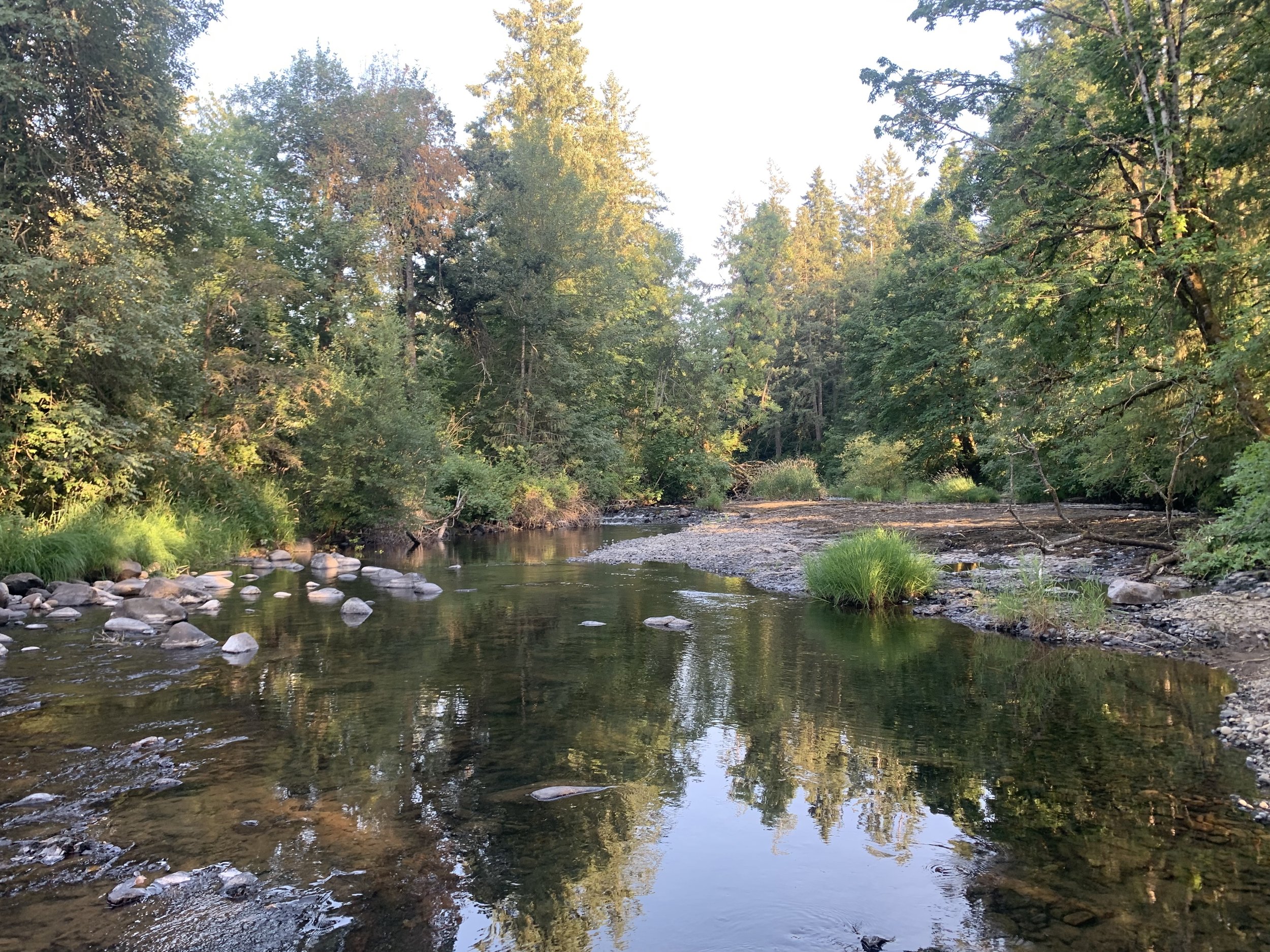
Coast Fork near Creswell
|
the Coast Fork has been significantly affected by habitat modification, such as disconnecting wetlands from the river, changes in the flow volume and timing (due to the dams), loss of riverside habitat, and channel modifications such as riprap that block floodplains from the river during high flow periods.
Flows are vastly different as well. The average monthly flows from January thru April are 20-30% of what they were under natural “pre dam” conditions. Flows during the dry summer and early fall months of August through October are more than double what they were naturally. In the main flood months of December and January, the average monthly flows are near the natural flow volume. |

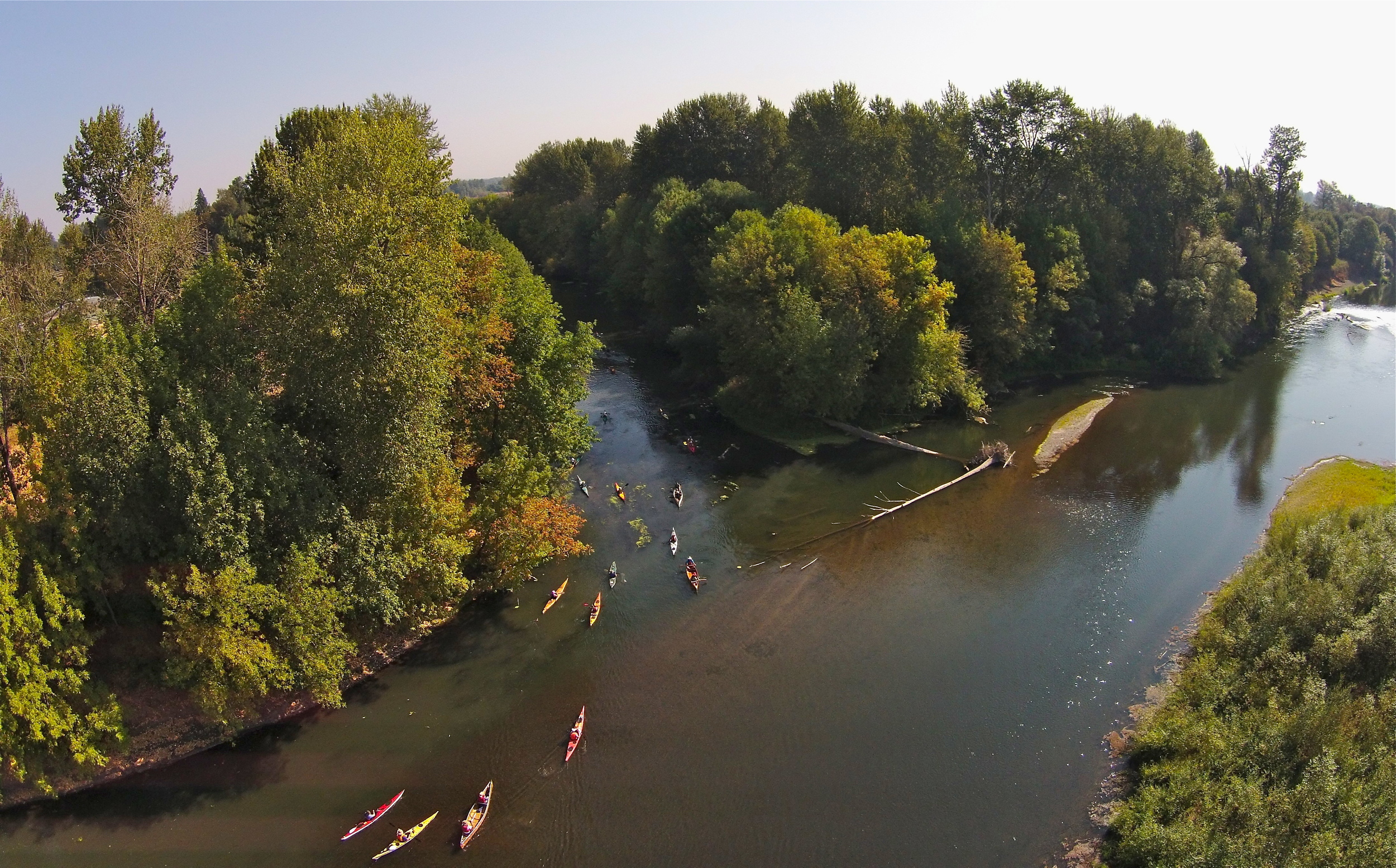
Small Coast Fork side-channel |
As the Watershed Assessment states, “data indicates the post-dam mean annual flow is 120% of the pre-dam flow, the peak flows have been reduced by 37%, and low flows are 5.8 times higher. Natural seasonal variability, as measured by the seasonal flow range, is half in the post-dam period.”
For more information contact the
Coast Fork Watershed Council at http://www.geocities.com/coastfork. |
Middle Fork Willamette
The Middle Fork Willamette is located in the south eastern portion of the Willamette watershed and flows from the Cascade Range. The Middle Fork flows into the Willamette River at Rivermile 186. The Middle Fork watershed 1,355 square miles encompass the communities of Oakridge, Westfir, Lowell, Dexter, Fall Creek, Jasper and portions of south Springfield and Pleasant Hill, as does the wild and scenic North Fork of the Middle Fork Willamette River and the pristine Waldo Lake.
Three flood control dams dominate the lower watershed: Dexter, Lookout, and Fall Creek. While the majority of the land above Lookout dam is publicly owed by the Forest Service, the majority of the land below is privately held. Smaller triburaries and sections of the Middle Fork are water quality limited for temperature and dissolved oxygen.
For more information contact the Middle Fork Willamette Watershed Council at http://www.mfwwc.org/home.html. |

Middle Fork Willamette |
McKenzie River
The mainstem of the McKenzie River originates at Clear Lake in the Cascade Mountains, and flows westward approximately 90 miles before reaching the Willamette River near Rivermile 172. Six major dams have been constructed on the McKenzie River for water storage and power generation. The city of Springfield is the largest city in the subbasin, but there are many smaller communities such as Thurston, Deerhorn, and McKenzie Bridge. Land use is primarily forestry.
For more information contact the very active McKenzie River Watershed Council at http://www.mckenziewatershedcouncil.org. |
Long Tom River
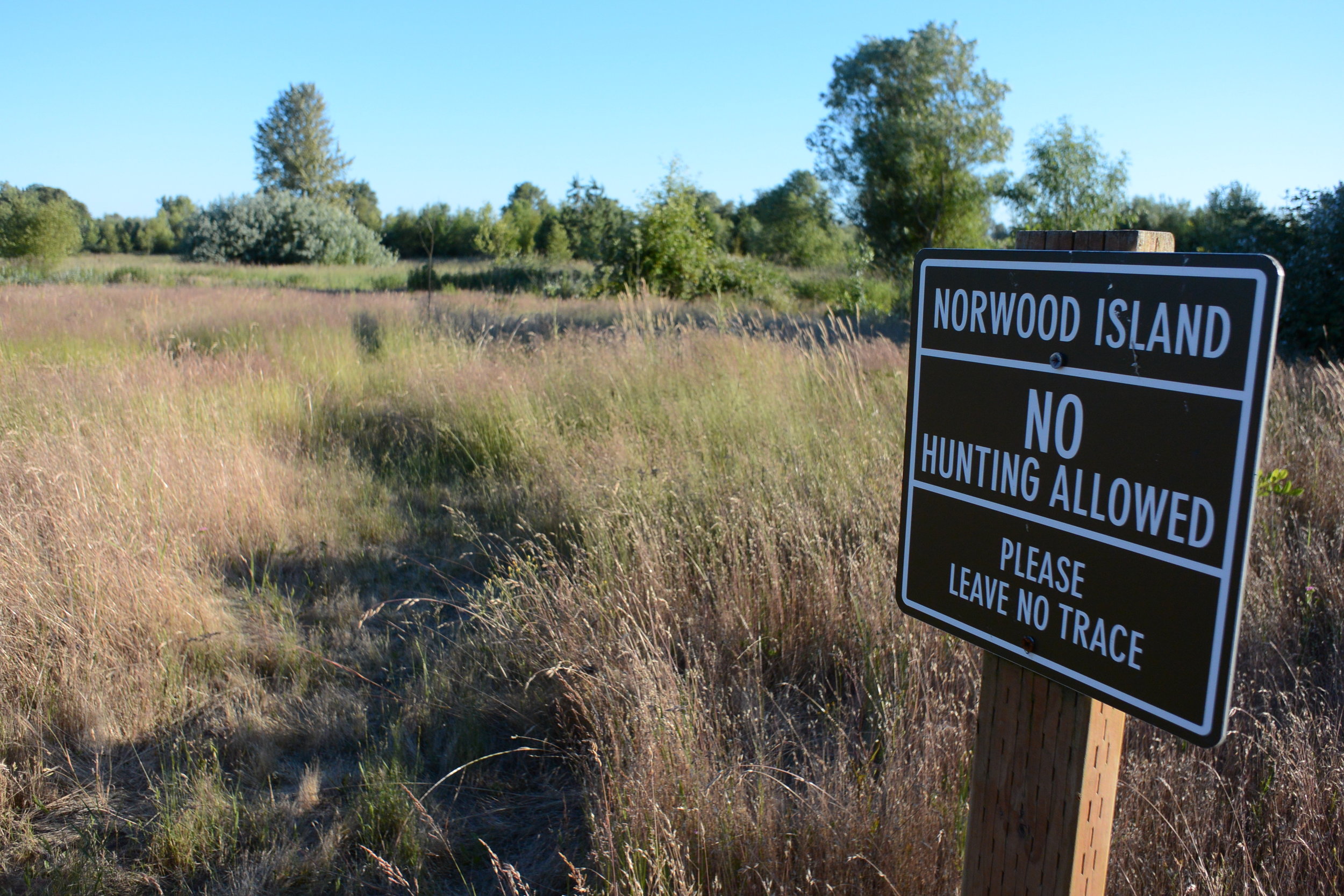
The Long Tom River drains 410 square miles and flows from the crest of the Coast Range Mountains through Fern Ridge Reservoir and approximately 25 miles before joining the Willamette at two locations, the original northern confluence and the channelized southern confluence at Norwood Island.
For more information visit the Long Tom Watershed Council at http://www.longtom.org/ |
Mary’s River
The Marys River is located along the east side of the Coast Range in western Oregon and flows from the headwaters of Mary’s Peak, through Benton County and into Corvallis before reaching the Willamette. The watershed encompasses 310 square miles with land uses consisting of upland forest area, a valley agriculture area, and a downstream urban area.
For more information visit Mary’s River Watershed Council http://www.mrwc.net/
|
Calapooia River
The Calapooia Watershed encompasses 365 square miles and flows 72 miles from its headwaters on Tidbits Mountain to it’s confluence with the Willamette River in Albany.
For more information contact the Calapooia Watershed Council at calapooia@centurytel.net.
|
Luckiamute River
The Luckiamute Watershed drains 314 square miles on the east slope of the coast range and includes mostly rural areas in Polk and Benton Counties. Falls City is the only incorporated municipality within the watershed.
For more information contact the Luckiamute Watershed Council at http://www.wou.edu/las/natsci_math/geology/luckiamute/.
|
Santiam River
The North and South Santiam encompass 1,805 square miles of the eastern portion of the Willamette Basin and drains the Cascade Range. The North Santiam flows into the Santiam River just upstream of the city of Jefferson. The Santiam River drains into the Willamette River at Rivermile 109.
For more information contact the North Santiam Watershed Council at http://www.open.org/~nsantiam/.
|
Yamhill River The Yamhill and Chehalem watersheds are located southwest of Portland, encompassing a drainage area from the crest of the coast range to the Willamette River in Yamhill and Polk Counties, the watershed includes approximately 1,069 stream miles. For more information contact eh Yamhill Basin Council at http://www.co.yamhill.or.us/ybc/. |
Molalla River
The Molalla River drains the Western Cascades of southwestern Clackamas County. The Molalla River quickly descends for nearly half its length until it enters Dickey Prairie, where the river begins to meander through agricultural lands until it reaches its mouth at the Willamette River at Rivermile 36 near Canby. Combined, the Molalla and Pudding River watershed drains 877 square miles east of the Willamette River. The Pudding River's headwaters are in the low-lying Waldo Hills east of Salem. For nearly all of its length, the Pudding River slowly meanders through prairies that are used for agricultural operations before reaching the Molalla about one-and-a-half miles above it's confluence with the Willamette River.
|

Molalla River aerial photo |
| For more information contact Molalla River Watch at http://molallariverwatch.org/themolalla.html or the Pudding River Watershed Council at http://www.open.org/~h2osheds/puddingriver/. |
Tualatin River
The Tualatin River drains an area of 712 square miles and flows approximately 83 miles from its headwaters in the Coast Range to the Willamette River near West Linn and Rivermile 29. The subbasin lies almost entirely within Washington County.
For more information contact the Tualatin Riverkeepers at http://www.tualatinriverkeepers.org/ or the Tualatin River Watershed Council at http://www.trwc.org/tualatin_info.html. |

Fisherman form a hog line on the Clackamas near 99E Bridge. |
Clackamas River
The Clackamas River Watershed includes 940 square miles and extends from the Mt. Hood National Forest northwest to the Willamette River. The Clackamas River provides drinking water for approximately 175,000 people in Clackamas County, the metro area, and Estacada. Portland General Electric operates the Clackamas River Hydroelectric Project in the Clackamas Subbasin. The Oak Grove Fork development is the highest, located between approximately 1,500 feet of elevation at the confluence with the Clackamas and approximately 4000 feet of elevation at Timothy Lake. The Stone Creek Project (operated by PGE for Eugene Water and Electric Board) diverts and returns flow to the Oak Grove Fork. Approximately 20 miles downstream from the Oak Grove Fork, PGE operates three more dams and associated facilities: North Fork, Faraday, and River Mill.
For more information contact the Clackamas River Basin Council at http://clackamasriver.org/ |

Clackamette Park near the Clackamas confluence. |