|


Links
|
|
|
|
|
|
| |
 |
 |
|
E.coli monitoring
|

|
In order to encourage safe use of the Willamette River, Willamette Riverkeeper tests E.coli levels bi-monthly at ten sites on the Lower Willamette. Use this information to choose the best time and place for your river recreation. Remember that our data may not reflect conditions at the time you choose to hit the river.
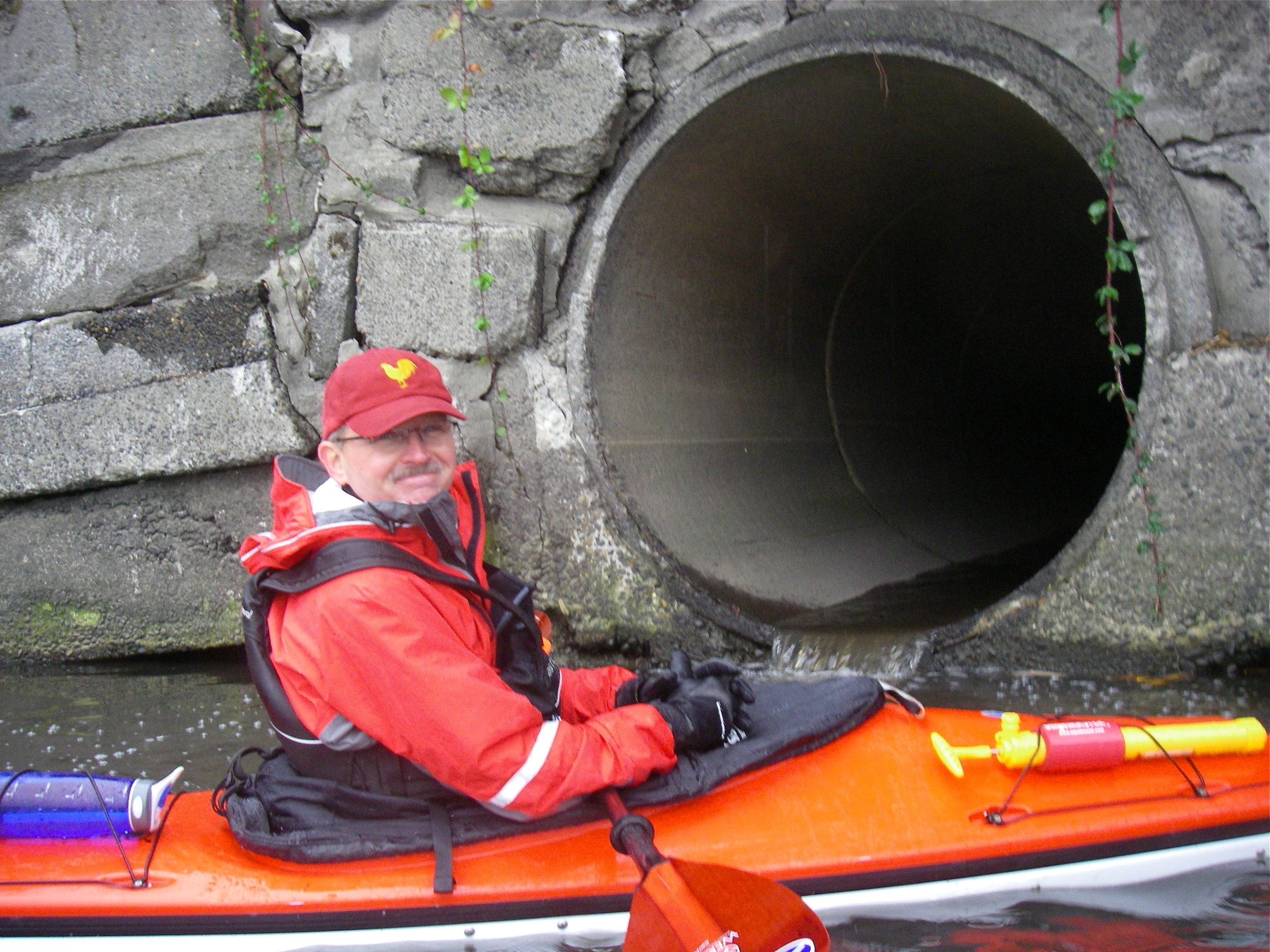
CSO pipe releasing bacteria rich water into the Willamette just north of the Morrison Bridge. |
Contact WRK for current E. coli data results at 503-223-6418. |
What is E.coli?
Escherichia coli is a rod-shaped bacteria that lives in the lower intestines of warm-blooded mammals. It is necessary for the proper digestion of food but its presence in surface water indicates fecal contamination. E.coli belongs to a group of bacteria (some of which are harmful) known as fecal coliform bacteria. E.coli itself can not cause illness unless it is introduced into an open wound or the urinary tract. Certain strains, such as the infamous E.coli O157:H7, can be toxigenic, meaning they create a toxic by-product which can harm humans. These strains are generally found in poorly prepared food and can be fatal to children and seniors. Overall, E.coli is our friend since it allows us to digest food and acts as a freshwater diagnostic tool that may suggest the presence of harmful bacteria such as Salmonella, giardia, and others.
|
|
|
Scanning Micrograph of E.coli bacteria. The picture frame is 2 micrometers in width.
|
E.coli bacteria magnified to 10,000x.
|
Where does it come from?
Humans, livestock, birds, wildlife, and pets can all act as vectors for the introduction of fecal coliforms such as E.coli. Therefore E.coli can find its way into the river from water that flows over land and into the river (non-point source) or contaminated waters flowing through outfalls to the river (point source). Farms (especially those with a high density of animals and those that use liquefied manure for fertilization), geese droppings and other animal scat, and pet feces that someone neglected pick-up are all examples of non-point source E.coli vectors. In the Portland area and some other urban areas in the Willamette Valley, Combined Sewage Outfalls are an example of point source contamination. When a fraction of an inch of rain falls on Portland, the city’s antiquated sewage system is overwhelmed and a mixture of stormwater and sewage is ejected into the Willamette. The City of Portland plans on resolving this problem with the Big Pipe Project which should be completed in 2011. Large capacity sewage pipes will be placed far underground, parallel to the river on both banks. They will retain stormwater and sewage flow until it can be pumped from Swan Island to the Columbia Blvd water treatment plant.
|
How can it affect humans?
The type of E.coli that Willamette Riverkeeper monitors will not harm humans unless it is introduced to the urinary tract or an open wound. Although these type of infections can become quite harmful, they can easily be cured with antibiotics. More likely to prove harmful are other fecal coliforms, the presence of which is indicated by the presence of E.coli. These bacteria may cause everything from mild gastro-intestinal distress to prolonged problems including fever, vomiting, weight loss, typhoid and more. Certain strains of E.coli can be harmful to humans but it is unlikely that one would encounter these in the Willamette.
|
How does WRK test E.coli?
We use the IDEXX QuantiTray 2000 sampling equipment provided by the Oregon Department of Environmental Quality. A sample is collected by a WRK volunteer and delivered to our office within 24 hours. The sample receives a reagent packet which is basically a fluorescent labeled medium on which the bacteria can grow. This mixture is sealed into a counting tray which is then incubated for 24 hours. Next, a black-light is used to view the tray and count the “most propable number” of bacteria per 100 milliliters.
|
 |
|
A grab sample is taken in a sterile 100 mL bottle and processed within 24 hours. |
Medium containing a fluorescent label is added and the tray is viewed under a blacklight after incubation. |
What does the data mean?
Each site tested by WRK has its own chart of current and previous data. The EPA recommended criteria for E.coli in a single sample is 235 MPN/100 mL. If, when you check the site, levels have been consistently high in the last few samples- exercise caution. Another value to check is the Geometric Mean for the site. Since E.coli can often vary by orders of magnitude, this measurement gives an unbiased average across a number of samples. The EPA recommended criteria for Geometric Mean is 126 MPN/100 mL. If the Geometric Mean for your favorite recreation site is above 126 you might want to start looking for a cleaner place to get in the water. |
About E.coli Standards
In order to maintain a safe level of bacteria in our waters, state standards are necessary for enforcement. Standards are based upon how the water is used (all the standards in the graph below are the most restrictive for each state). |
|
Each standard represents a number of people likely to become sick from swimming in water with that bacteria concentration that the standard creators have deemed acceptable. For instance, Vermont's standard for a single sample of 77 MPN/100mL predicts that 4 in 1000 swimmers will become ill. The EPA standard for single samples of 235 MPN/100 mL considers 8 in 1000 swimmers an acceptable amount. 9 of 15 states that use E.coli as a bacterial indicator (other states using Enterococci or Fecal Coliform) use the EPA recommended 235 MPN/100 mL. The EPA standard for Geometric Mean is 126 MPN/100 mL. No states exceed this standard although some have more restrictive standards.
The Oregon Standard for a single sample, 406 MPN/100mL, is the second highest in the country. This is based upon the fact that there are no designated freshwater beaches in Oregon. Therefore, the 406 standard does not apply to swimming, rather the next tier of beneficial use. You many notice that we report our E.coli data using the EPA standard of 235 MPN/100 mL. Regardless of whether or not designated beaches exist on the Willamette River, people do and will continue to swim in its waters. We've chosen to use a lower threshold for what is considered dangerous for swimming in order to protect a greater number of river enthusiasts.
|
What can I do to help solve the E.coli problem?
Although the City of Portland is going to great lengths to ameliorate the effects of CSOs, there are several things we all can do to help:
1) Disconnect your downspout and manage your stormwater on-site. Many houses in Portland send their stormwater (from roofs and pavement) into the sewer system. This adds to the overwhelming flood of stormwater that causes CSO overflows. By properly disconnecting your downspout you can deal with your stormwater on site and take a little pressure off the system. Additional methods of dealing with stormwater are eco-roofs, bio-swales and more.
2) Create a riparian buffer. If you live along the river, maintaining a healthy buffer consisting of native plants between your property and the water will reduce runoff full of E.coli and many other pollutants.
3) Clean up after your pet. Pet waste causes a large percent of E.coli problems. Even if you're miles from the river, the stormwater that washes over your dog's waste is going somewhere!
4) Be a responsible river user. Use public restrooms (check out the Willamette Water Trail guides for locations), pack out your waste, or at the very least, bury your waste above the high water mark.
5) Don't feed wild animals at riverside locations! Waterfowl become habituated to receiving handouts from humans at certain spots (Clackamette Park is a great example) and frequent these areas. As a result, feces collect in high concentrations.
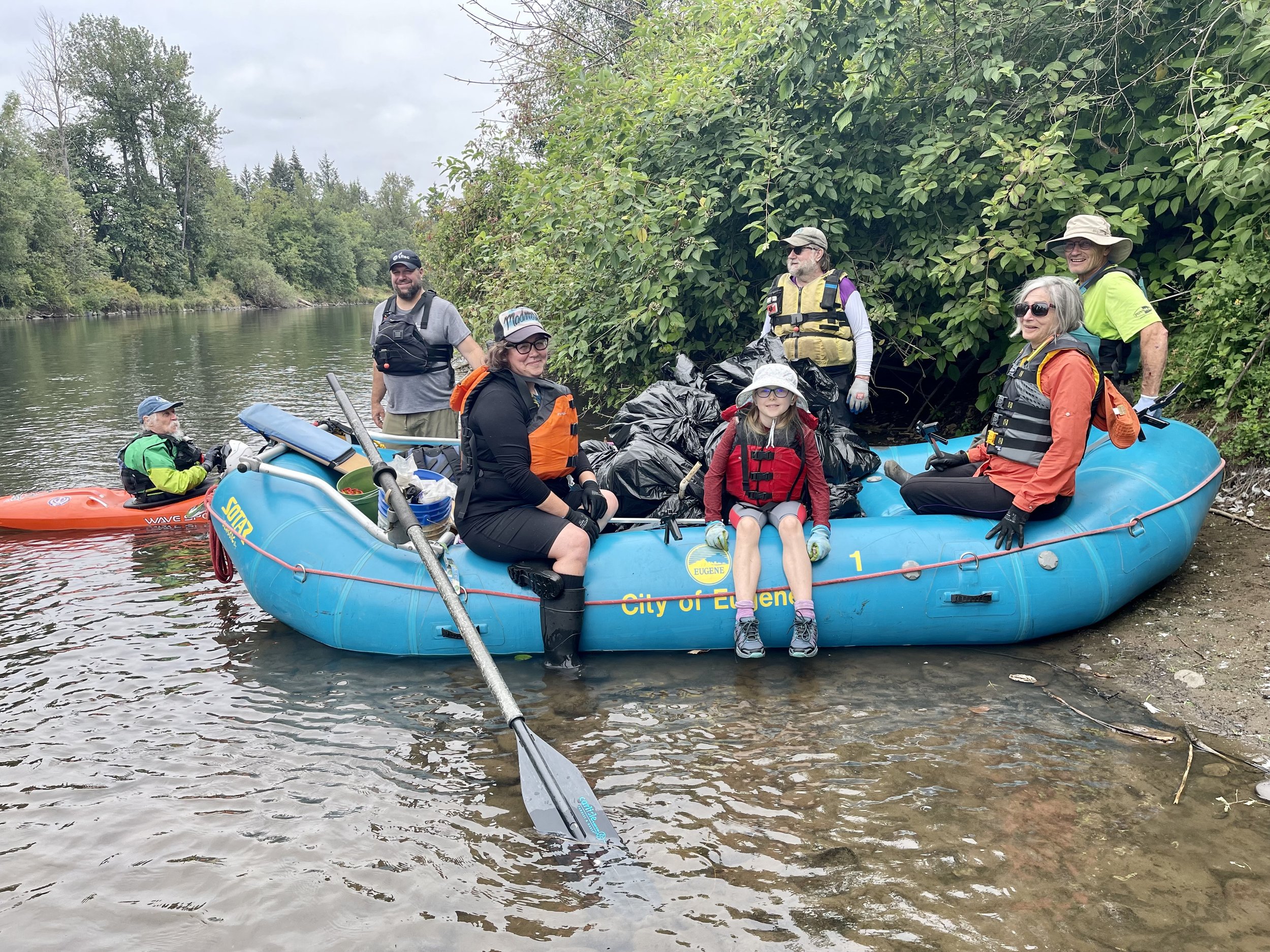
6) Become a volunteer E.coli monitor for Willamette Riverkeeper! Contact Monica.
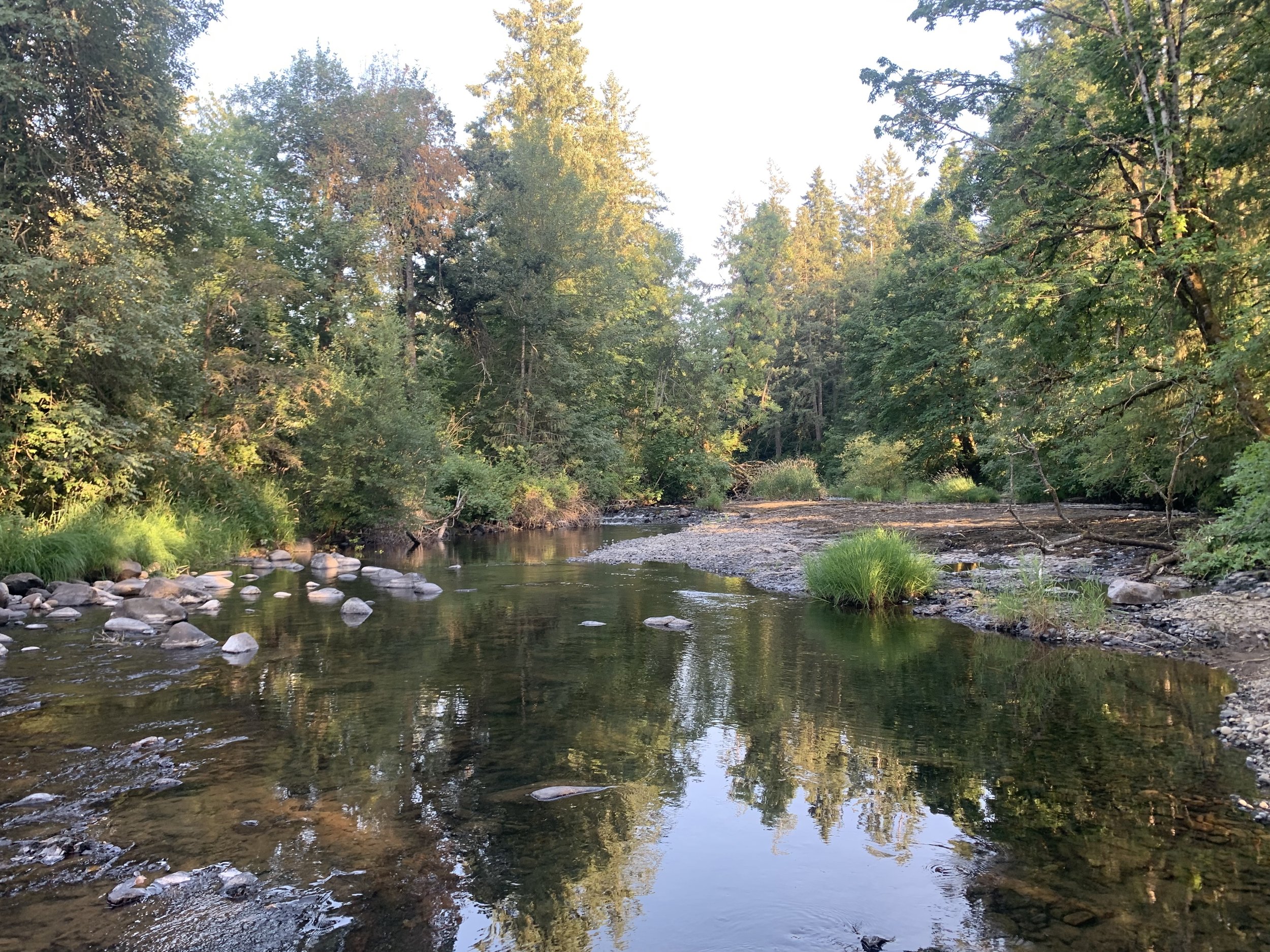
Now that you know all about E.coli, go check the data! |
REMEMBER: Willamette Riverkeeper provides this data to inform your decisions but you make the final call. E.coli levels can change extremely fast, especially in the middle of the summer after rain events. Low E.coli counts do not necessarily guarantee that it is safe to swim, just as high E.coli counts do not necessarily guarantee that it is unsafe. Since we only sample bi-monthly, our data does not reflect the exact conditions from day to day. |
|
|
 |
 |
 |
 |
 |
|
|
| |
home
|the river|programs|about
us |how to help| contact
web
development by YSAT Enterprises
 hosting & ISP
by easystreet.com |
|
|